
SaaS development
SaaS Development
SaaS development is the work of designing and building software that customers use as a service, usually through a subscription, rather than a system installed and owned as a one off product.
SaaS development built around a product customers will keep paying for
We work with startups, product teams and businesses that want to launch or rebuild a cloud product. That includes B2B platforms, vertical applications and subscription services that have to support many customers on one system, without giving each of them a separate copy of the software.
Our SaaS development services cover product discovery, MVP planning, architecture, development, billing, integrations, testing and the product work that follows launch. An internal system that is not sold as a product belongs with custom software development. A public website is a different brief.
01
What SaaS development involves, and who it is for
SaaS product development covers more than the application screens. It includes the commercial model, the way a new customer gets started, how accounts and permissions work, how usage is recorded, and how the product can be changed after the first customers are live.
Custom SaaS development is for teams whose product does not fit a template. A vertical workflow, a particular pricing model, or a service that currently depends on people rather than software often needs behaviour a generic platform cannot provide. SaaS developers have to decide what belongs in the first release, and what would only slow that release down.
The same work applies when an established product has to be redeveloped. The question is no longer whether the idea can exist. It is whether the current architecture, billing and experience can support the customers the business already has, and the ones it wants next.
02
The problems that stall a SaaS product
Turning a product idea into a viable application is harder than listing features. Teams overbuild an MVP, then spend months on work customers have not asked to pay for. Poor product onboarding has the opposite effect: the software exists, but a new account never reaches the useful part, so the subscription does not last.
Rigid technical architecture shows up later. A data model that assumes one customer, or billing that cannot express the real plans, becomes expensive to change. Weak account management, unclear roles and permissions, and disconnected integrations create support work that the product was meant to remove. Scaling issues and technical debt then make every new feature slower than the last.
Poor user experience and difficulty evolving an established SaaS product are often the same problem seen at different stages. The product no longer matches how customers work, but the codebase, the admin tools and the integrations make a careful change feel unsafe. SaaS software development has to treat that as a product problem, not only a technical one.
03
What a subscription product can change
A well made SaaS product can create a path to recurring revenue, but only if customers understand the value and can reach it without a manual onboarding project for every account. Launching a digital product, or turning a service into software, is a way to test market demand with something people can actually use, rather than with a pitch alone.
The same product can improve retention when the work customers return for is reliable: their data, their team, their history and the next action. It can scale service delivery and reduce manual delivery, because the software carries the repeatable part of the service. Self service products do this most clearly, when a customer can start, configure and continue without waiting for the vendor.
Some businesses also use a platform to create proprietary intellectual property, or to enter a market that a services model could not reach at the same volume. None of this is a guarantee of customers or revenue. SaaS application development is the work of making the product coherent enough that those outcomes are possible, not a promise that they will follow.
04
Product discovery, MVP planning and what to leave out
SaaS MVP development should prove that a specific customer can complete a specific job and see why they would continue. Discovery is the work of naming that customer, that job, and the commercial model before the build starts. A roadmap that tries to include every future plan in the first release usually delays the only evidence that matters: whether anyone will use it.
Feature planning is therefore a reduction, not a catalogue. Accounts, the core workflow, a credible way to pay or to be invited, and enough admin control to operate the product are often enough. Reporting, extra integrations and edge cases can wait if they are not required for the first customers to succeed.
UX belongs in that plan, not after it. Website design thinking helps with clarity, but a SaaS web application is a product people return to, not a page they visit once. Onboarding, empty states and the first successful action decide whether the MVP is a product or a demonstration.
05
Tenancy, accounts, billing and onboarding
Multi tenant SaaS development means many customers share one application and one operational model, while their data, settings and permissions stay separate. That separation has to be designed into the data model and the access rules, not added as a filter later. Authentication, user roles and organisation level permissions decide who can invite a colleague, change a plan or see another team's records.
Subscription software development has to treat billing as part of the product. Plans, trials, upgrades, seats, usage and failed payments all create states the application must understand. A customer who cannot see what they are paying for, or an admin who cannot see who is active, will generate support work that billing software alone does not remove.
Customer onboarding is the bridge between a new account and the first useful outcome. It can include invitations, setup, sample data, permissions and the guidance that gets a team to the core workflow. Usage tracking and product analytics then show whether that path is working, which is more useful than a count of sign ups alone.
06
SaaS development services
We provide SaaS development services for teams building a product they intend to operate and improve, not a one off system for a single organisation. Typical work includes:
- B2B SaaS products and vertical SaaS
- SaaS MVPs and subscription platforms
- Multi tenant applications
- Customer portals and admin systems
- Internal SaaS platforms
- API driven and AI enabled SaaS
- SaaS redevelopment
Where the brief is an internal system rather than a product sold to customers, custom software development is the better fit. A companion product on a phone belongs with mobile app development. AI can sit inside a SaaS product where it solves a defined task, such as search, classification or document handling.
07
Admin systems, APIs, cloud architecture and scale
Dashboards and admin portals are how the business runs the product: customers, plans, support cases, feature access and the exceptions that should not require a developer. A platform that can only be operated through the database will not stay reliable as the customer base grows.
APIs and integrations connect the product to the tools customers already use, and they let other software act on the same data with permission. An API driven product can also support a later mobile application or a partner integration without exposing the whole system. The integration has to fail visibly. A silent gap between the SaaS product and another platform becomes a support problem and a trust problem.
Cloud SaaS development is the usual way to host this kind of product, with environments that can be updated, monitored and scaled. Databases, background work and application architecture should make tenancy, billing events and permissions obvious. Performance matters when lists grow, reports run across a tenant's data, or many organisations are active at once. Scalability is a planning decision: more customers should not require a new architecture if growth was part of the original design.
08
Security, redevelopment and ongoing product development
Security has to be designed with the data the product holds for other organisations. Authentication, session handling, tenant isolation, encrypted communication and restricted admin access are baseline concerns. The right controls depend on what each customer stores and who inside their organisation can see it.
SaaS redevelopment is the right conversation when an existing platform is hard to change, expensive to operate, or no longer matches the product the business wants to sell. The useful work is to keep the behaviour customers rely on, retire what no longer earns its place, and replace the parts of the stack that create technical debt. A product roadmap should then say what will be built next, and what will be left alone.
Launch is not the end of SaaS software development. Operating the product means fixes, performance work, new plans, new integrations and the features customers have shown they will use. Website maintenance can sit alongside that where the marketing site and the wider digital estate need the same continuity.
Process
Our SaaS development process
Product discovery
We start with the customer, the job the product must do, and the commercial model. That decides what a first version has to prove.
MVP and feature planning
We define the smallest product that can be used, paid for and operated, and we leave out work that does not help the first customers succeed.
UX and architecture
We design the experience, the tenancy model, accounts, permissions and the structure the product will be built and maintained on.
Development
We build the application, admin tools, billing behaviour and connections the agreed product needs.
Testing and launch
We test the journeys a new customer and an operator depend on, then release the product into use.
Continuous product improvement
We continue development from real use: what customers do, what support reveals, and what the roadmap says should come next.
Selected work
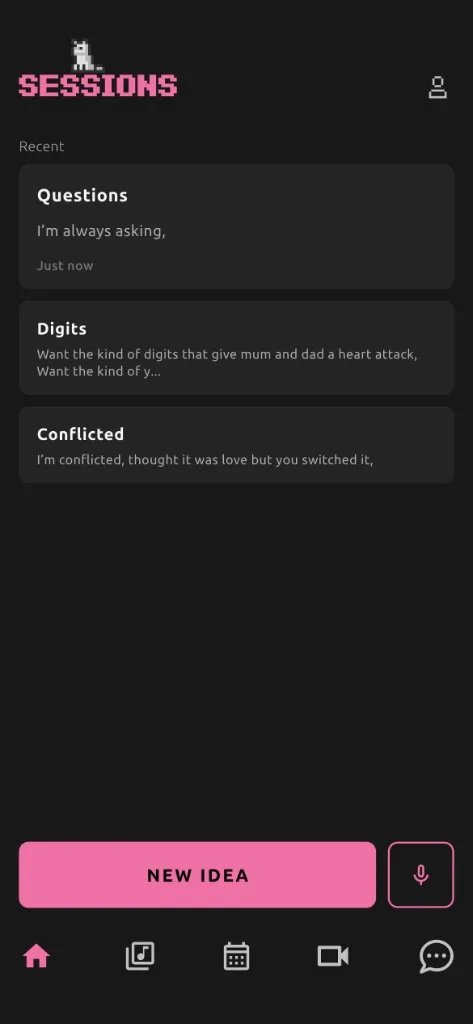
Sessions
A connected creative environment for the full lifecycle of a song, from the first unfinished thought through writing, recording, collaboration, project management and release.
- Mobile App Development
- Product Design
- AI Development
- Native Audio
A SaaS product is only ready to sell when a new customer can understand it, pay for it and reach the useful part without a manual project.


09
How we work
We work as a SaaS development agency that treats the platform as a product with customers, not as a feature list for a single organisation. The useful test is whether a new account can start, a team can work, and the business can see who is active and what they are paying for.
You can expect custom SaaS development, a considered choice about what belongs in the first release, and a build that includes tenancy, accounts and the operational tools the product needs. If you are comparing SaaS product developers or a SaaS development company, ask whether the conversation starts with the customer and the commercial model, or with a technology preference.
Start a project
Start your SaaS development project
Considering a SaaS product, an MVP, or the redevelopment of a platform you already operate? Speak to our SaaS developers about the customer, the subscription model and a realistic path from plan to a product you can run.
FAQ
Frequently asked questions about SaaS development
SaaS development is the process of designing, building and improving software that customers use as a service, usually through a subscription.
It includes the application, accounts, permissions, billing, admin tools, integrations and the architecture needed to support many customers on one product.
SaaS means software as a service. Customers access the software over the internet, usually for a recurring fee, rather than buying and installing a copy for themselves.
The provider operates the product, including updates, hosting and the systems that keep each customer's data separate.
Cost depends on the scope of the first release, the number of user roles, billing complexity, integrations and how much of an existing product has to be replaced.
A focused MVP costs less than a platform with several plans, admin tools and multiple external systems. A clear picture of what the first customers must be able to do is the only reliable way to price the work.
Timelines follow the size of the first release, the commercial model, integrations and whether an existing platform or dataset has to be carried forward.
A contained MVP can move more quickly than a rebuild of a live product with paying customers. We set a schedule once the scope is agreed.
A SaaS MVP is the smallest version of the product that a real customer can use, and that the business can operate.
It should prove the core job and the reason to continue, without including every feature on the later roadmap. Startups often begin here so demand can be tested before a larger build.
Multi tenant SaaS is a product in which many customers use the same application, while their data, settings and permissions remain separate.
That separation has to be part of the architecture. It is what allows one product to be operated for many organisations without giving each of them a separate system.
Yes, where the commercial model requires it. That can include plans, trials, seats, usage, upgrades and the account states that follow a successful or failed payment.
Billing has to be understood by the product, not only by the payment provider.
Yes. A SaaS product can connect to CRM, accounting, identity, support and industry tools, usually through APIs.
An API can also be built so customers, partners or a later mobile application can work with the same data under the right permissions.
Yes. Existing products can be redesigned or redeveloped to improve the experience, performance, tenancy, billing and the ability to add further features.
The starting point is what current customers rely on, and which parts of the platform are blocking the next stage of the product.
Yes. A SaaS product normally continues to change after launch.
Ongoing work can include new features, performance improvements, billing changes, integrations, security updates and the maintenance required to keep the product operable.