

01 Firebase centric
Firebase centric
The initial architecture leaned heavily on Firebase. Within the opening weeks the application already had authentication, project models, audio recording, storage, profiles and collaboration foundations.

Case study · Artist toolkit
Building an artist operating system from the studio out
Sessions brings songwriting, recording, collaboration, project management, release planning and AI into one connected creative environment.
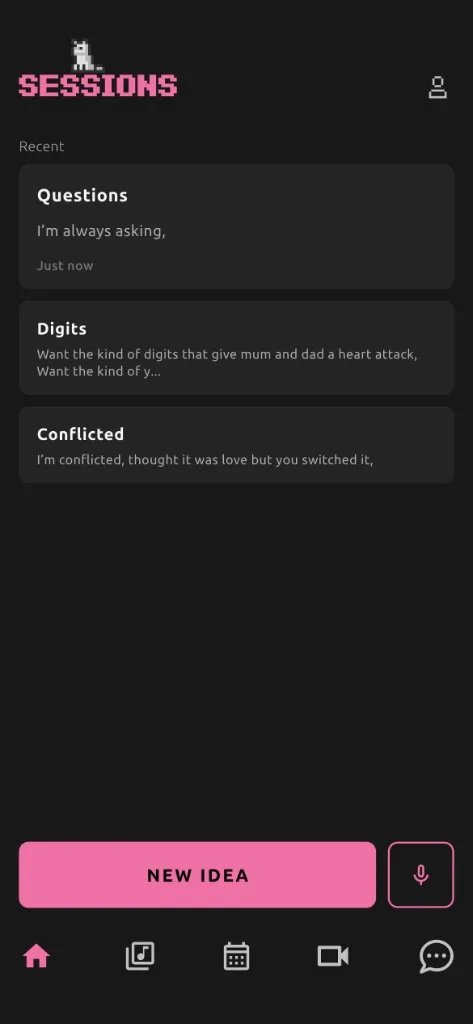
The project at a glance
~17 months
~3,010
~786k
967+
194
Two people
The problem
Sessions started with a deceptively simple problem.
Songwriters were creating in one place, recording ideas somewhere else, planning releases in another tool and managing the business of their music across an increasingly fragmented collection of apps.
Notes. Voice Memos. DAWs. Cloud folders. Calendars. Project boards. AI tools.
None of them understood the complete journey.
We set out to change that.
Sessions became a connected creative environment designed around the full lifecycle of a song, from the first unfinished thought to writing, recording, collaboration, project management and release.
The workflow
The original product thesis was straightforward: working artists should not have to assemble their creative workflow from disconnected software.
Sessions brings the different stages together.
An idea can begin as a lyric, a voice recording or an unfinished thought. It can become a structured song, move into a wider project, develop through collaboration and recording, then carry its tasks, files, budgets, artwork and campaign planning towards release.
That idea became the foundation of the product.
Instead of organising Sessions around conventional software modules, we designed the experience around the way creative work actually progresses.
Projects move through a visual lifecycle, while songs, recordings, tasks and creative assets stay connected underneath it.
The result is less like opening a project management application and more like returning to a digital studio.
Capture
An idea can begin as a lyric, a voice recording or an unfinished thought.
Write
Lyrics take shape as structured songs, with rhymes, recordings and creative tools within reach.
Make
Recording, instrumentals and sampling stay attached to the song rather than living in another application.
Prepare
Tasks, files, budgets and artwork stay connected to the work that is heading towards release.
Release
Campaign planning sits in the same environment as the writing and recording that produced the song.
Product character
We did not want Sessions to inherit the visual language of conventional SaaS.
The product needed personality.
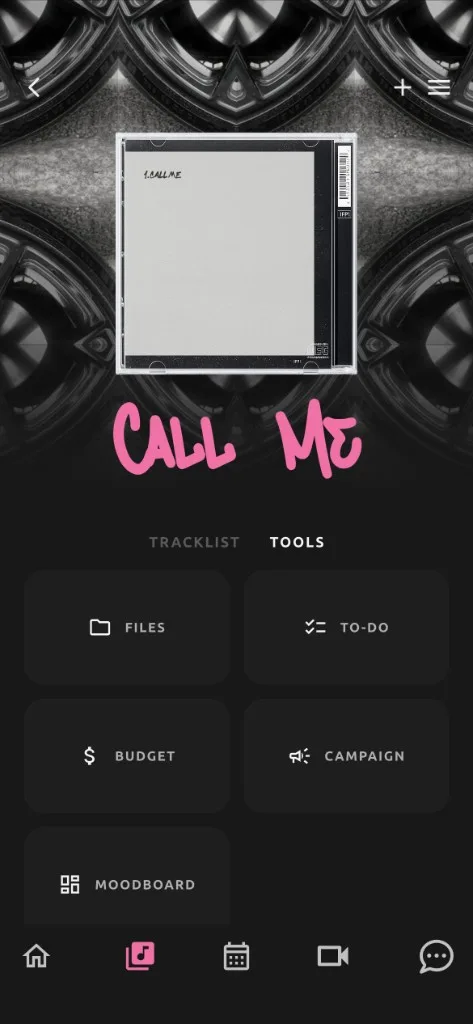
Its visual language draws from physical studio equipment, old software, CDs, samplers, hardware controls and pixel interfaces. Projects can appear as CD cases. AI writing tools behave more like studio hardware than chat windows. A sampler becomes a bank of tactile pads. Even the home screen has its own ambient character.
That physicality became an important design principle.
Digital interactions were given a sense of movement and object permanence. Projects flip. Songs can be reordered. Ideas move between stages. Creative tools feel like instruments rather than forms.
The challenge was balancing that character with a product containing an increasingly sophisticated set of workflows. Every new capability had to feel as though it belonged in the same world.
The writing surface
At the centre of Sessions is the writing experience.
Songwriters can structure lyrics into verses, choruses, bridges and other sections while keeping recordings, instrumentals and creative tools within reach.
Live rhyming runs beneath the writing experience without requiring users to open another search tool. Repeated sections can remain connected so changes propagate naturally. Performance mode turns the writing surface into a cleaner environment for recording or rehearsal.
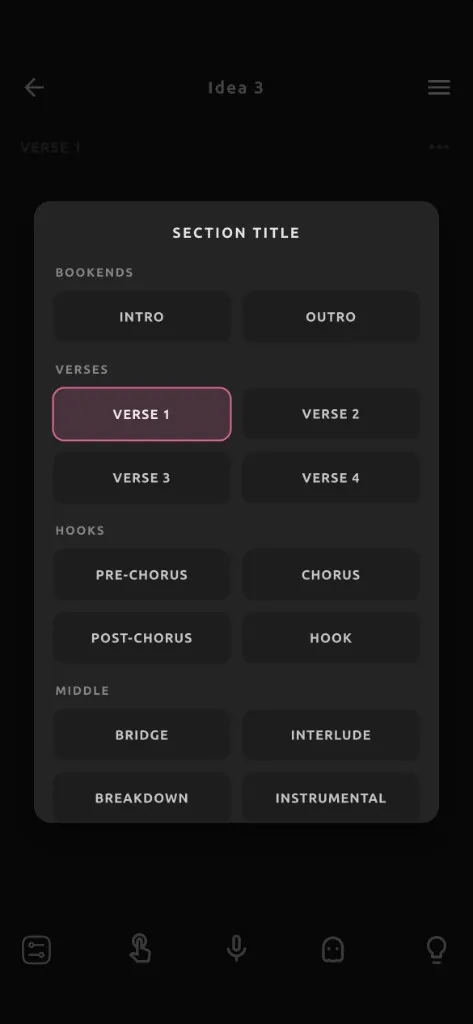
Sections
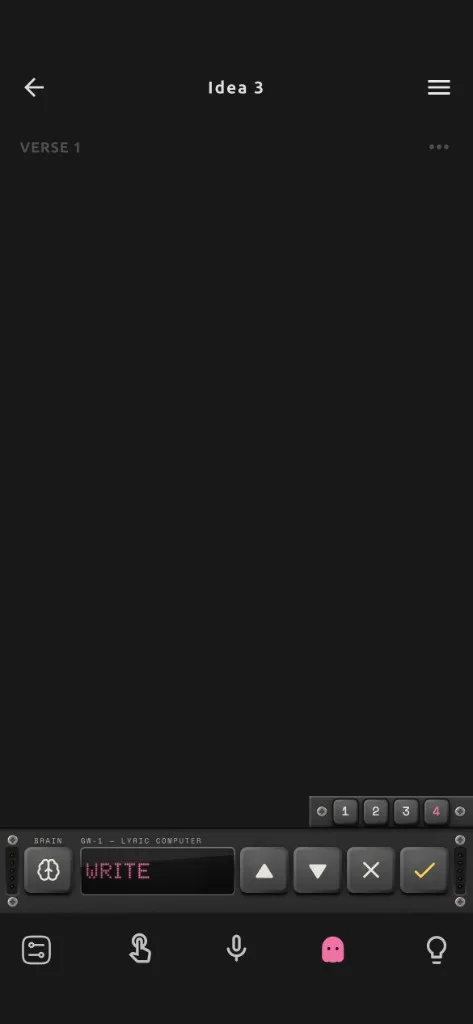
Write
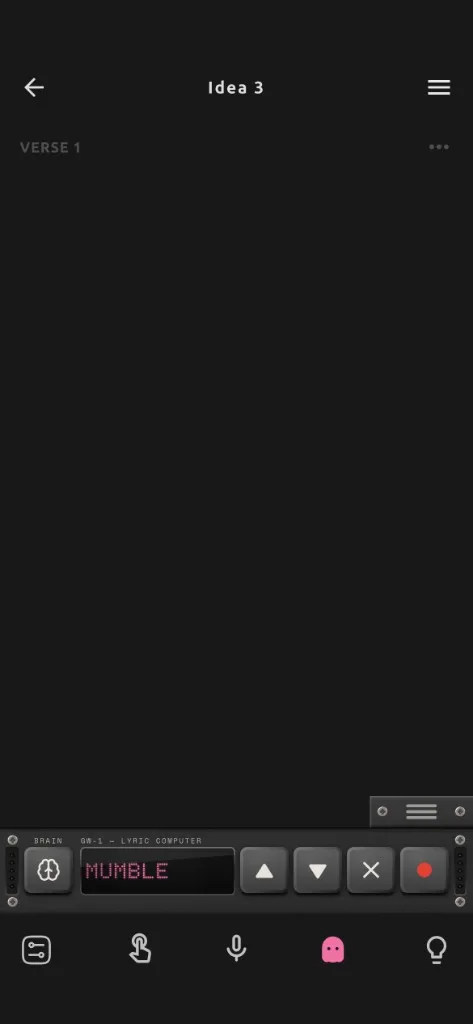
Mumble
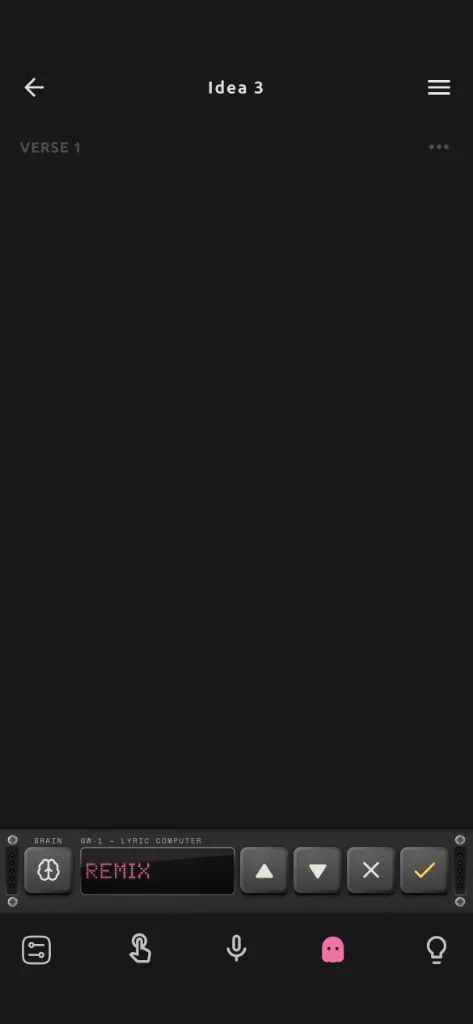
Remix
Then there is Ghost Writer.
Instead of treating AI as a separate chatbot, we integrated it directly into the creative surface. It can continue writing at the caret, remix selected lyrics and work with a project's themes, genre, perspective and existing ideas.
With Mumble, that interaction became multimodal. An artist can sing or mumble a melodic idea into the application. On device speech technology processes the recording before the AI workflow uses the performance as creative context for new lyrics.
Images and screenshots can become inputs too, using OCR to bring existing lyrics back into the writing environment.
AI is there to assist the creative process, not replace it. That distinction influenced everything from the interface to the system architecture behind it.
Live rhymes
Rhyming stays beneath the writing surface, without opening another search tool.
Ghost Writer
AI continues at the caret, remixes selected lyrics and works with the project’s existing ideas.
Mumble
A sung or mumbled idea becomes creative context for new lyrics.
Quick Record
Recordings attach to songs and sections without leaving the writing environment.
Native audio
Audio began as a way to capture ideas. It did not stay that way.
As Sessions matured, the recording layer evolved into a much deeper part of the product. Users can attach recordings directly to songs and sections, write against instrumentals and work with audio without abandoning the project around it.
Eventually, the limits of conventional Flutter audio packages became the limit of the product itself. So we went native.
Timeline
Punch in
Chop 33
16 pads
Record · slice · drum · melodic
The mobile DAW combines a Flutter interface and project model with dedicated native audio engines underneath. On iOS, AVAudioEngine handles full duplex playback and recording, sample accurate clips, punch in recording and latency compensation. Android uses its own low latency native audio path.
That decision opened the door to a substantially richer recording experience while preserving a single cross platform product above it.
We applied the same thinking to Chop 33, a sixteen pad sampler with recording, slicing, melodic and drum modes, BPM control and its own native audio implementation.
What started as a songwriting application was becoming an instrument.
Realtime collaboration
Writing together sounds simple until two people edit the same lyric at the same time.
Early Sessions collaboration proved the concept. The next challenge was making it robust enough to behave the way users expect modern collaborative software to behave.
The collaboration architecture evolved around Yjs and CRDTs, supporting concurrent text editing, section changes, awareness and remote carets.
The complexity extends well beyond synchronising a text field. Users can change section titles, reorder content, duplicate sections, hide them, split them and continue writing while collaborators make changes of their own.
Sessions therefore needed collaboration to understand the structure of a song, not just its text.
The resulting system combines the Flutter client with a dedicated collaboration service, WebSockets and Redis backed realtime infrastructure.
It was one of several areas where an early implementation was deliberately replaced as the product matured.
Song document
Verse
keep the light on
until the chorus finds us
Chorus
we leave the door ajar
and let the mix run long
AI inside the product
As the application grew, AI also moved beyond creative suggestions.
Manager was designed as an assistant with awareness of the artist's wider workspace. Instead of simply answering questions, it can work with the structures inside Sessions: projects, songs, tasks, events, budgets and campaigns.
That required a completely different AI architecture. The application needed controlled server side context, tool calling, secure APIs and clear boundaries around what the assistant could and could not change.
A dedicated backend and AI orchestration layer were developed to provide that capability.
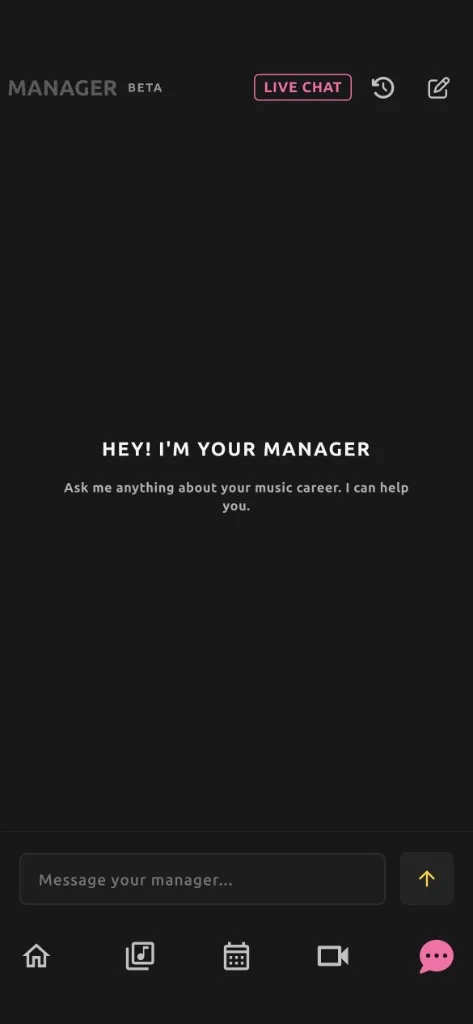
Manager
Manager
Prepare the next steps for this project and keep them attached to the release.
01 Request
An artist asks Manager to prepare the next steps around a project.
02 Context
The assistant reads the workspace: projects, songs, tasks, events, budgets and campaigns.
03 Tools
A controlled tool runs through a server side API, inside the same permissions as the rest of the product.
04 Confirmation
The change is visible in Sessions itself, not only in a chat transcript.
Product state
Campaign tasks now sit on the project, beside the songs and files already in Sessions.
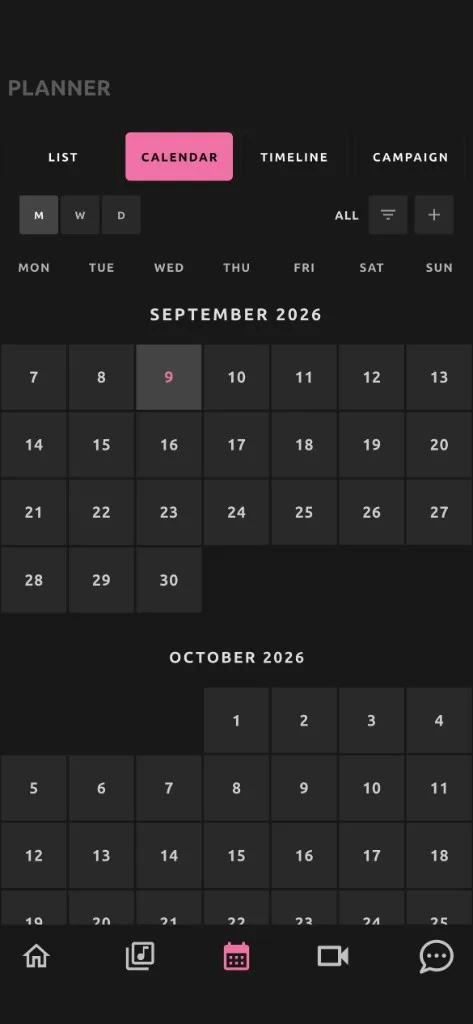
Visible in the product
The wider AI platform grew to support multiple model providers, workflow orchestration, virtual currency, multimodal inputs, cover generation and specialised tools including Ghost Writer and Content Studio.
The important part was not adding more AI. It was giving AI a meaningful role inside an existing product.
The system therefore combines generative models with conventional APIs, permissions, application state and business logic so the model works within the same rules as the rest of the software.
Architecture
Sessions grew far beyond a conventional mobile application. The core Flutter product is supported by backend APIs, realtime collaboration infrastructure, AI workflows, native audio engines, cloud services, operational tooling and distribution infrastructure.
Some of the most important engineering decisions on Sessions were decisions to replace our own earlier work.
Firebase centric
Local first
Realtime CRDT
Native audio
AI orchestration
01 Firebase centric
The initial architecture leaned heavily on Firebase. Within the opening weeks the application already had authentication, project models, audio recording, storage, profiles and collaboration foundations.
02 Local first
As offline behaviour became more important, the data strategy evolved towards a local first model. Local data became increasingly important to how the application behaved.
03 Realtime CRDT
Collaboration started with a custom implementation before moving to a CRDT architecture with Yjs, WebSockets and Redis backed realtime infrastructure. The system had to understand the structure of a song, not only its text.
04 Native audio
Audio began with plugins before the requirements demanded native audio graphs. Dedicated iOS and Android engines now sit beneath the Flutter interface for recording, playback, punch in workflows and sampling.
05 AI orchestration
AI began as individual creative tools before developing into agents, multimodal workflows and application level orchestration, with controlled context, tools and permissions.
The initial architecture leaned heavily on Firebase. As offline behaviour became more important, the data strategy evolved towards a local first model.
Collaboration started with a custom implementation before moving towards a CRDT architecture.
Audio began with plugins before the requirements demanded native audio graphs.
Onboarding evolved from screen specific logic into reusable, data driven scene definitions.
AI began as individual creative tools before developing into agents, multimodal workflows and application level orchestration.
Each transition followed the same principle: promote the difficult part from a feature into infrastructure.
The system Sessions has today was not designed in one perfect architecture meeting before development began. It evolved through production use, changing requirements and increasingly ambitious product ideas. That is precisely what made the engineering interesting.
The wider system
By this point, calling Sessions a mobile app no longer described the engineering behind it.
The Flutter application sits at the centre of a wider product platform.
Firebase supports authentication, storage, messaging and parts of the data layer. FastAPI and Cloud Functions support application services and server side operations. A dedicated gateway handles routing. Realtime collaboration has its own infrastructure. AI workflows are orchestrated separately. Subscription and virtual currency systems manage commercial access.
There are also native audio engines, OCR, on device speech recognition, operating system widgets, sharing extensions, deep links and external platform integrations.
Behind the scenes, we built administration tools, schema utilities, testing harnesses and internal tooling to make operating that environment manageable.
This was product engineering in the broader sense. Not simply writing screens, but building the systems required to design, ship, monitor and continuously evolve the product.
Application
Flutter application
Platform
Authentication and storage
Platform
Backend APIs
Platform
Gateway
Product systems
Realtime collaboration
Product systems
Native audio
Product systems
AI workflows
Product systems
LLM services
Commercial
Analytics
Commercial
Subscriptions
Product evolution
The first Git commit on the current Flutter codebase landed on 6 April 2025. The months that followed were not a straight line. They were a sequence of product decisions that forced the architecture to catch up.
April 2025
The first Git commit on the current Flutter codebase landed on 6 April 2025. Opening weeks already included Firebase integration, project models, audio recording, storage, profiles and collaboration foundations.
May and June 2025
The writing surface grew into a creative toolkit, with Ghost Writer integrated into the lyric environment rather than sitting beside it as a separate chatbot.
October 2025
The project lifecycle expanded. Songs, recordings, tasks and creative assets stayed connected underneath a visual path from capture through to release.
December 2025
A dedicated backend emerged to support application services, AI workflows and the wider platform around the Flutter client.
February 2026
Collaboration was rewritten around CRDTs, awareness and remote carets, so two people could edit the same structured song at once.
May 2026
Native audio arrived beneath the Flutter experience. One month generated approximately 1,050 commits in the Flutter repository as the product moved through an intense development phase.
June and July 2026
Chop 33 turned the phone into a sixteen pad sampler. Collaboration work focused on making concurrent editing behave the way artists expect.
August and September 2026
Mumble gave AI an audio input. Sessions Room brought another social environment into the product, and shipping continued across the wider artist operating system.
Quality and shipping
The first Git commit on the current Flutter codebase landed on 6 April 2025. Within the opening weeks, the application already had Firebase integration, project models, audio recording, storage, profiles and collaboration foundations.
From there, the product continued to expand. Ghost Writer and the creative toolkit arrived. The project lifecycle grew into an artist career operating system. A dedicated backend emerged. Collaboration was rewritten. Native audio arrived. Onboarding became its own framework. Chop 33 turned the phone into a sampler. Mumble gave AI an audio input. Sessions Room brought another social environment into the product.
One month alone, May 2026, generated approximately 1,050 commits in the Flutter repository as the application moved through one of its most intense development phases.
That pace demanded more than development speed. It required automated testing, continuous integration, separate environments, store deployment pipelines and a growing set of engineering rules that made it possible to keep changing the product without losing control of it.
Test and release
Delivery
The team
Sessions is one of those projects where the final interface hides the real scale of the work.
Behind a lyric editor sits native audio engineering. Behind a collaborator's cursor sits distributed state. Behind an AI suggestion sits orchestration, permissions, context management and cost control. Behind a release planner sits a connected model of projects, songs, tasks, campaigns and budgets.
Behind the application itself sits an operational environment spanning client software, cloud services, gateways, realtime servers, AI infrastructure, analytics, monetisation and deployment.
And the core of it was produced by a two person product team.
That constraint shaped the way we built. Reusable systems mattered. Automation mattered. Testing mattered. Internal tooling mattered. And, increasingly, carefully controlled development agents became another way to extend what a very small engineering team could ship.
The result is a useful demonstration of what a focused product team can build when design, software engineering and product decisions are treated as one discipline.
What we delivered
Automated testing, end to end flows, continuous integration, release pipelines and multiple deployment environments.
Technology
Application
Native
Backend
Realtime
AI
Infrastructure
Quality
The product
The public product is available through both stores. The current website directs artists to each platform.
The result
Sessions is now a production creative platform built around the lifecycle of independent music.
Artists can capture an idea, develop lyrics, record, collaborate, organise a project, manage the work around a release and use AI without leaving the environment surrounding the song.
The public product is available through iOS and Android, with the current website directing artists to both platforms.
On the UK App Store, Sessions is positioned as an integrated artist toolkit and currently carries a 5.0 rating from 14 ratings. Reviews repeatedly highlight the value of replacing separate lyric, recording and organisational tools with one connected workspace.
But the result we value most is architectural. Sessions grew from an application into a product platform without losing the creative identity that made it worth building in the first place.
A writing tool became a studio.
The studio became an operating system for the artist around it.
Start a project
The most interesting digital products rarely fit neatly into one discipline. They combine product thinking, interface design, software architecture, infrastructure and an understanding of where bespoke engineering is genuinely worth the investment. If you are building a mobile application, SaaS platform, AI product or custom software system with ambitious requirements, we can help take it from idea to production.