
Custom software development
Custom Software Development
Custom software development is the work of designing and building systems around a specific organisation: its rules, its people, and the jobs the software has to complete.
Custom software development built around how the organisation actually works
We work with business owners, operations leaders and technology teams that have outgrown spreadsheets, rigid platforms or ageing systems. The result is custom business software: internal tools, customer portals, web applications and automation that follow the process, rather than forcing the process to follow the product.
Our custom software development services cover discovery, architecture, development, integration, testing and the work that follows launch. A public website, a phone first mobile app or a multi tenant SaaS product is a different brief.
01
What custom software development is, and when it is needed
Bespoke software development starts from a defined set of users, workflows and business rules. The system is then designed around those requirements: who can see what, what happens when a record changes, and which other tools must stay in step.
Businesses usually need this when an off the shelf product cannot hold the process without constant workarounds. That might be a customer journey that no packaged portal supports, an internal approval path with unusual rules, or reporting that has to combine data the current tools keep apart.
Custom software developers earn their place when the cost of adapting the business to generic software is higher than the cost of building software around the business. The useful question is not whether a platform exists. It is whether that platform can run the work without staff compensating for it every day.
02
The limits of off the shelf systems
Packaged software is the right choice when it already matches the work. The problem begins when the organisation has to bend its operations to fit a product that was built for a general market. Rigid platforms hide this as configuration: extra fields, unused modules, and steps that exist only because the software expects them.
Spreadsheet dependency is often the first sign. A workbook starts as a list and becomes the system of record for bookings, memberships, jobs or approvals. Manual administration, duplicate data entry and version conflicts follow. Reporting is only as current as the last person who updated the file.
Disconnected software creates the same friction at a larger scale. The CRM, the accounts tool, the operations system and the customer facing site each hold a partial picture. Staff retype information, chase status, and rebuild reports by hand. Legacy systems add a further constraint: they still run essential work, but they are slow to change, difficult to integrate and expensive to keep alive.
03
The problems custom software can solve
Complex internal workflows are poorly served by tools that assume a simple path. Approvals, exceptions, handoffs between teams and rules that depend on the type of work all need to be explicit in the software. When they are not, people invent their own process around the system, and the official record stops matching what actually happens.
Poor reporting is usually a data problem, not a chart problem. If information lives in several places, or only exists in a spreadsheet, leaders cannot see workload, status or exceptions without asking someone to assemble it. Limited automation leaves the same tasks to be done by hand: notifications, status changes, document creation and routine checks.
Inefficient customer processes show up as repeated calls, unclear status and forms that do not connect to the work behind them. Platforms that cannot scale fail in a quieter way. More users, more locations, more records or more integrations expose an architecture that was never planned for that growth. Custom software solutions are justified when those problems are structural, not a matter of training or a missing setting.
04
What bespoke software can change for the business
Well designed business software development reduces administration by putting the work in one place, with the rules already applied. Operational efficiency improves when repetitive steps are automated and people spend their time on exceptions rather than on moving data between tools. Connecting systems reduces errors, because the same record is not typed twice and then reconciled later.
Reporting becomes more useful when it is drawn from the system that runs the work, not assembled afterwards. Customer experiences improve when a portal shows accurate status, documents and next steps without a phone call. The same system can support scale: more volume should mean more capacity, not a thicker spreadsheet.
Some organisations also use custom software to create a proprietary digital product: a way of delivering a service that competitors cannot simply subscribe to. Replacing outdated technology is part of that, but replacement is only valuable if the new system is easier to run and easier to change. None of this is a guarantee of savings. It is the difference between software that holds the process and software that staff have to work around.
05
Internal systems, portals, web applications and automation
Internal software development covers the tools staff use to run the organisation: job tracking, case handling, membership administration, scheduling and the records that operations depend on. Employee portals give people a controlled view of their own work, requests and information, with permissions that match their role.
Customer portals do the same for the people outside the business. They can show bookings, documents, account history and status without exposing the internal system. Web application development is often the right form for this work. A custom web application can be reached in a browser, updated without an app store, and shared across teams, while still behaving like a product rather than a public marketing site.
Workflow automation software and business process automation belong in the same plan. The useful automation is specific: when a record reaches a state, the next person is notified, a document is created, or another system is updated. Dashboards and reporting sit on top of that data so leaders can see what is waiting, what is late and what needs a decision. A database is the foundation. If the data model is unclear, the screens and the automation will be unclear as well.
06
Custom software development services
We provide software development services for organisations that need a system built around their own requirements. Typical work includes:
- Internal systems and employee portals
- Customer portals
- Workflow platforms and business process automation
- CRM, booking and membership platforms
- Dashboards, reporting systems and custom databases
- Web applications
- API integrations with existing software
- Legacy software modernisation
Where the product is sold to many customers as a subscription platform, SaaS development is the related brief. A product that lives primarily on a phone belongs with mobile app development. AI can sit inside a system where it solves a defined task, such as classification, search or document handling.
07
Data, integrations, cloud systems and architecture
Business application development depends on a clear data model: what a record is, who owns it, and how it relates to the rest of the work. Authentication and role based access decide what each person can see and change. Permissions should follow the organisation, not a generic set of user types copied from another product.
APIs and integrations connect the new system to the tools that must remain: accounting, CRM, ecommerce, identity, document storage and industry platforms. The integration has to handle failure as well as success. A sync that silently drops records creates a worse problem than a manual step that people can see.
Cloud software development is usually the practical way to host this kind of system, with environments that can be updated, monitored and scaled. Application architecture should make the important paths obvious: where business logic lives, how background work is handled, and how the system will be maintained when the first version is no longer the current one. Enterprise software development raises the same questions at a larger scale: more roles, more sites, more data and a higher cost if the design is careless.
08
Security, testing, scale and legacy modernisation
Security has to be designed with the data the system holds. Accounts, personal information, commercial records and integrations each need appropriate controls: authentication, session handling, encrypted communication, restricted access and a clear record of sensitive actions. The right standard depends on what is stored and who can reach it.
Testing should cover the journeys the business relies on, including permissions, exceptions and the integrations that move data elsewhere. Performance matters when lists grow, reports run across large datasets, or many people use the system at once. Scalability is a planning decision. More users and more records should not require a rewrite if the architecture was honest about growth.
Legacy software modernisation is often the real project. The useful work is to keep the behaviour people depend on, migrate the data that still matters, and replace the parts of the stack that block further change. Ongoing development then keeps the system aligned with the organisation: fixes, new rules, new integrations and the maintenance that packaged software would have handled through a vendor. Website maintenance can sit alongside that where the wider digital estate needs the same continuity.
Process
Our custom software development process
Discovery
We start with the business problem, the people who do the work, and the systems already in use. That decides what the software must change, and what can stay as it is.
Requirements
We define users, roles, workflows, data and integrations in enough detail to design from, and clear enough to challenge before development begins.
Architecture and design
We plan the application structure, data model, permissions and interfaces so the system can be built, tested and maintained without hiding the important decisions.
Development
We build the software around the agreed rules, including the screens, business logic, database and connections the process needs.
Integration and testing
We connect required systems and test the journeys, permissions, exceptions and data flows that the organisation will depend on.
Deployment and ongoing improvement
We release the system into use, then continue development as processes, volumes and connected tools change.
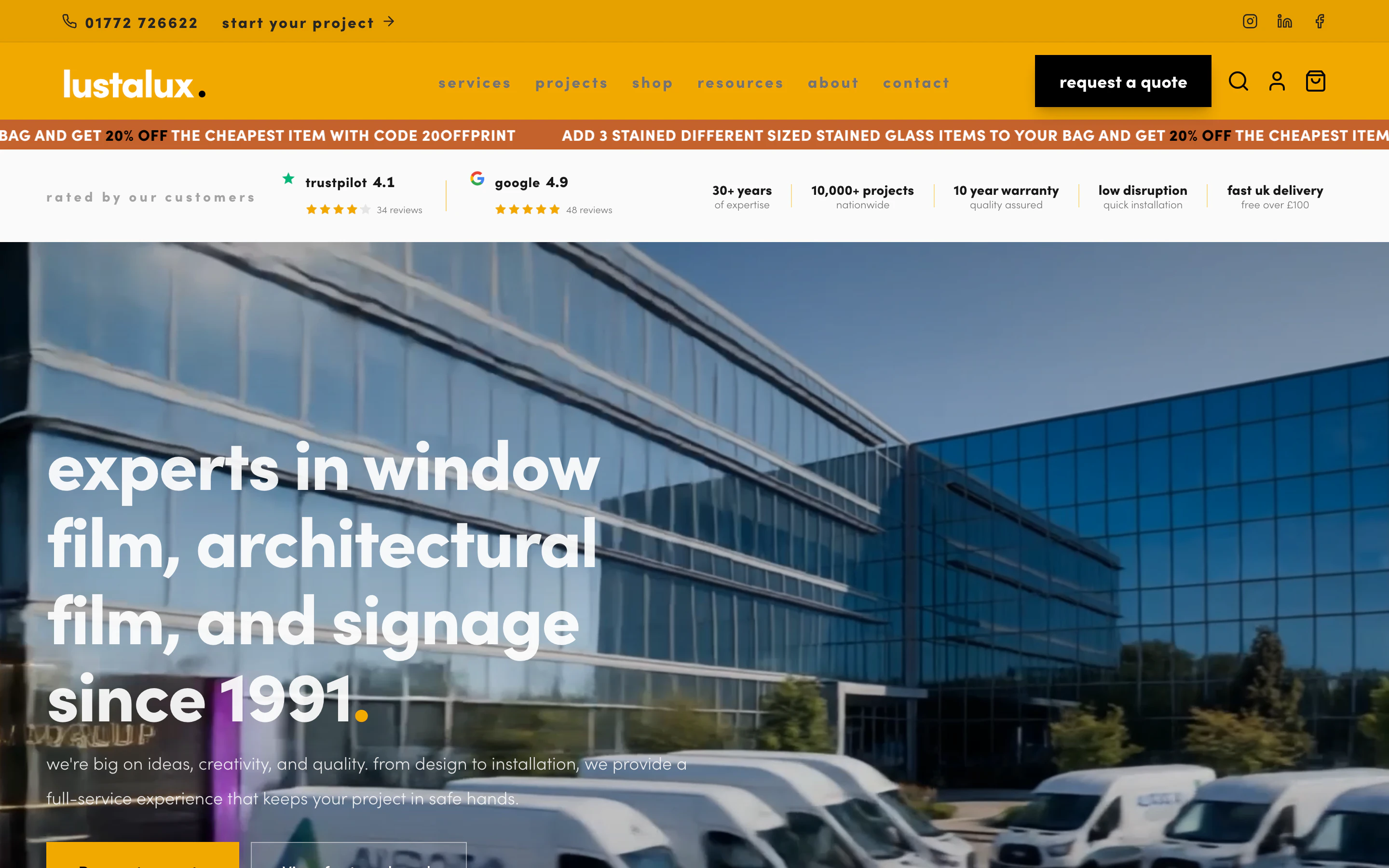
Selected work
Lustalux
One website for Lustalux commercial services and Lustalux Direct, rebuilt as a custom Next.js storefront on Saleor, with made-to-measure commerce, staff operations and a WooCommerce migration designed around existing search equity.
- Ecommerce Development
- Website Development
- Website Design
- Custom Software
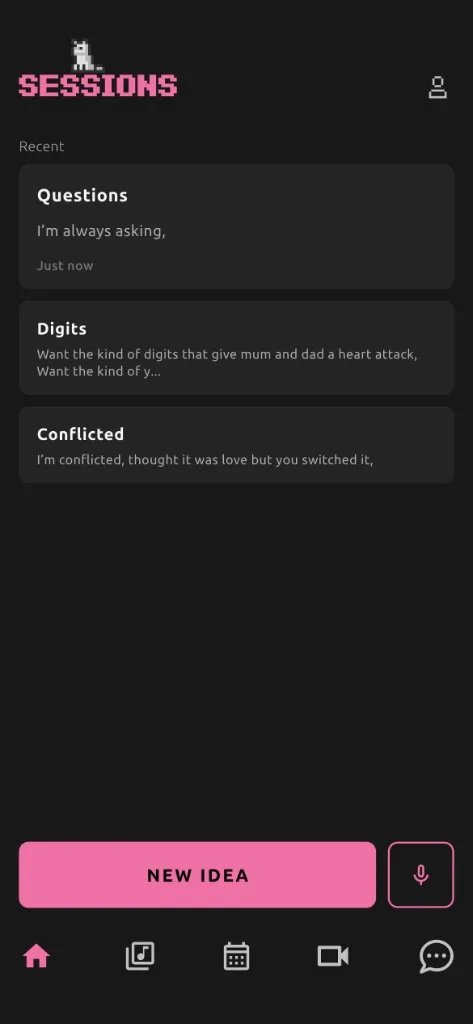
Selected work
Sessions
A connected creative environment for the full lifecycle of a song, from the first unfinished thought through writing, recording, collaboration, project management and release.
- Mobile App Development
- Product Design
- AI Development
- Native Audio
Custom software is only useful if the people who run the process can complete the work without working around the system.



09
How we work
We work as a software development agency that treats the system as an operational product, not a list of features. The useful test is whether the right person can complete the important task, and whether the record that results is accurate enough for the next person and for reporting.
You can expect bespoke software development, a considered architecture, and a build that includes the integrations the process actually needs. If you are comparing custom software developers or a software development company, ask whether the conversation starts with the work and the data, or with a technology preference.
Start a project
Start your custom software development project
Have a business problem, a set of software requirements, or an existing system that no longer fits the work? Speak to our bespoke software developers about the process, the people who use it, and a realistic path from requirements to a system the organisation can run.
FAQ
Frequently asked questions about custom software development
Custom software development is the process of designing and building software around the specific requirements of an organisation.
It can include internal systems, customer portals, web applications, workflow automation, databases, dashboards and integrations. The software follows defined users, rules and processes rather than a generic product template.
Bespoke software development is another name for the same work: software created for a particular organisation rather than sold as a ready made product.
The value is in the fit. The system is shaped around the workflows, data and permissions the business actually uses.
Cost depends on the number of user types, the complexity of the workflows, the data model, integrations and how much of an existing system has to be replaced or connected.
A focused internal tool costs less than a platform with several portals, automated processes and multiple external systems. A clear picture of the work is the only reliable way to price it.
Timelines follow scope, the number of integrations, the amount of design required and whether existing data or systems have to be migrated.
A contained system can move more quickly than a replacement for software that people already depend on. We set a schedule once the requirements are agreed.
Not always. Off the shelf software is the better choice when a suitable product already runs the work without constant workarounds.
Custom software is usually more valuable when the organisation has workflows, permissions or integrations that a generic platform cannot support without staff compensating for it every day.
Yes. Custom software can usually be connected to existing systems through APIs and other integration methods.
That can include CRM, accounting, ecommerce, identity, document storage and industry platforms. The options depend on what those systems expose and how reliable the connection needs to be.
Yes, where a spreadsheet has become the system of record for work that needs permissions, history, automation or shared access.
The replacement should keep the information people rely on, then add the controls and workflows a workbook cannot provide safely.
Yes. Existing software can often be redeveloped or replaced, with the essential behaviour retained and the parts that block change removed.
That can include data migration, a clearer interface, new integrations and a structure that is easier to maintain.
It can be, if scale is planned rather than assumed.
Architecture, data design, performance and hosting should be considered against the users, records and integrations you expect. Software that cannot scale is usually software whose growth was never specified.
Yes. Custom software usually needs continued development after launch.
Support can include fixes, performance work, security updates, new functionality and integration maintenance as the organisation and its connected systems change.